
By VICTORIA HUESO
The Tower
What if death wasn't just about saying goodbye, but celebrating the lives of those we have lost?
Dia de los Muertos is a Mexican tradition that honors loved ones who have passed.
Dia de los Muertos primarily takes place on Nov. 1-2. These are days when families get together and honor their loved ones through dedicating decorations, putting altars together, praying, and eating their favorite meals.
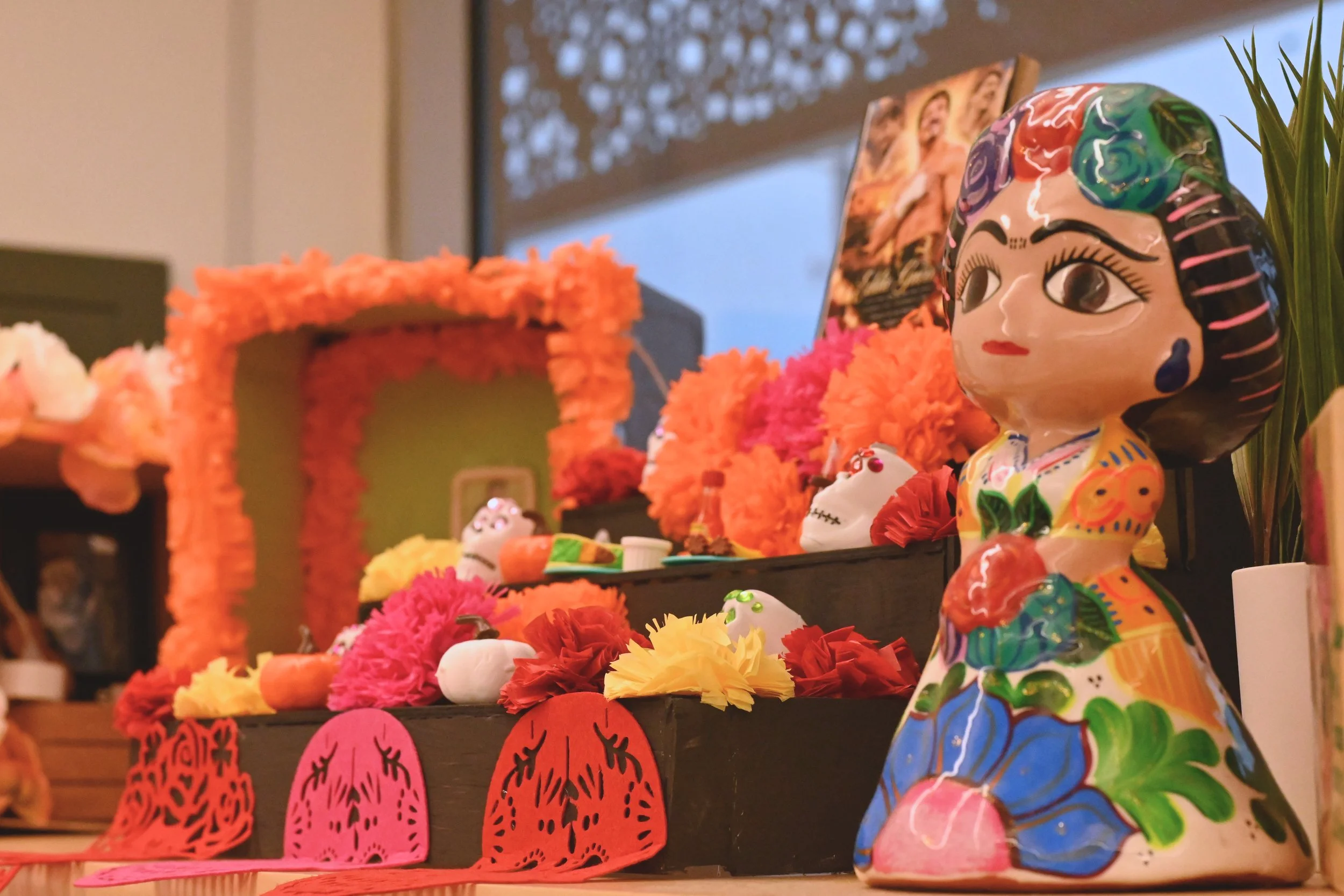
A bone rattling tradition bringing the dead back to us (Thomas O’Hare/The Tower)
"Dia de los Muertos is an original Aztec/Indigenous tradition that is about remembering your loved ones," said Manteca High Spanish teacher Fatima Ridoloso.
Ridoloso celebrates this day by decorating her class and making her students make an altar dedicated to anyone who has passed away. She also organizes a class potluck for her Spanish speaking classes and brings together her folklorico dancers to do an amazing dance in the quad during lunch.
The Hispanic Youth Leadership Club also does activities around campus for Dia de los Muertos. This year, they sold aguas frescas, like horchata, after school and built papel picado for decorations.
Agua de horchata is a Mexican drink that brings a lot of comfort to families. It is placed on family altars and shared during holiday gatherings to welcome returning spirits. Papel picado symbolizes the bridge between the living and the dead and a core element of the traditional altar.
"I think it's important to keep traditions like this alive because it is beautiful to show your culture to others who aren't apart of it and to remember the importance of this day," said Manteca High senior Valeria Chavez, the president of HYLC.
Dia de los Muertos isn't just a day where you remember, but a day to have hope.
You have to hope and believe that your lost ones came to you and accepted what you set out for them. This day is about families believing that the connection they once shared with their past loved ones did not disappear after death.
"In the Aztec tradition, they would normally put out food that they liked when they were alive because it was the only day that they could come to spend the night with you, and after that, they go back," said Ridoloso.
Families do not think of this day as a sad holiday, but it is to remember that death doesn't have to make you forget someone. Instead of focusing only on sadness, the holiday focuses on celebrating the lives of those who came before us. It also gives younger generations hope by teaching them that their family history, culture, and traditions are worth keeping alive.