
Balancing Caution and Creativity
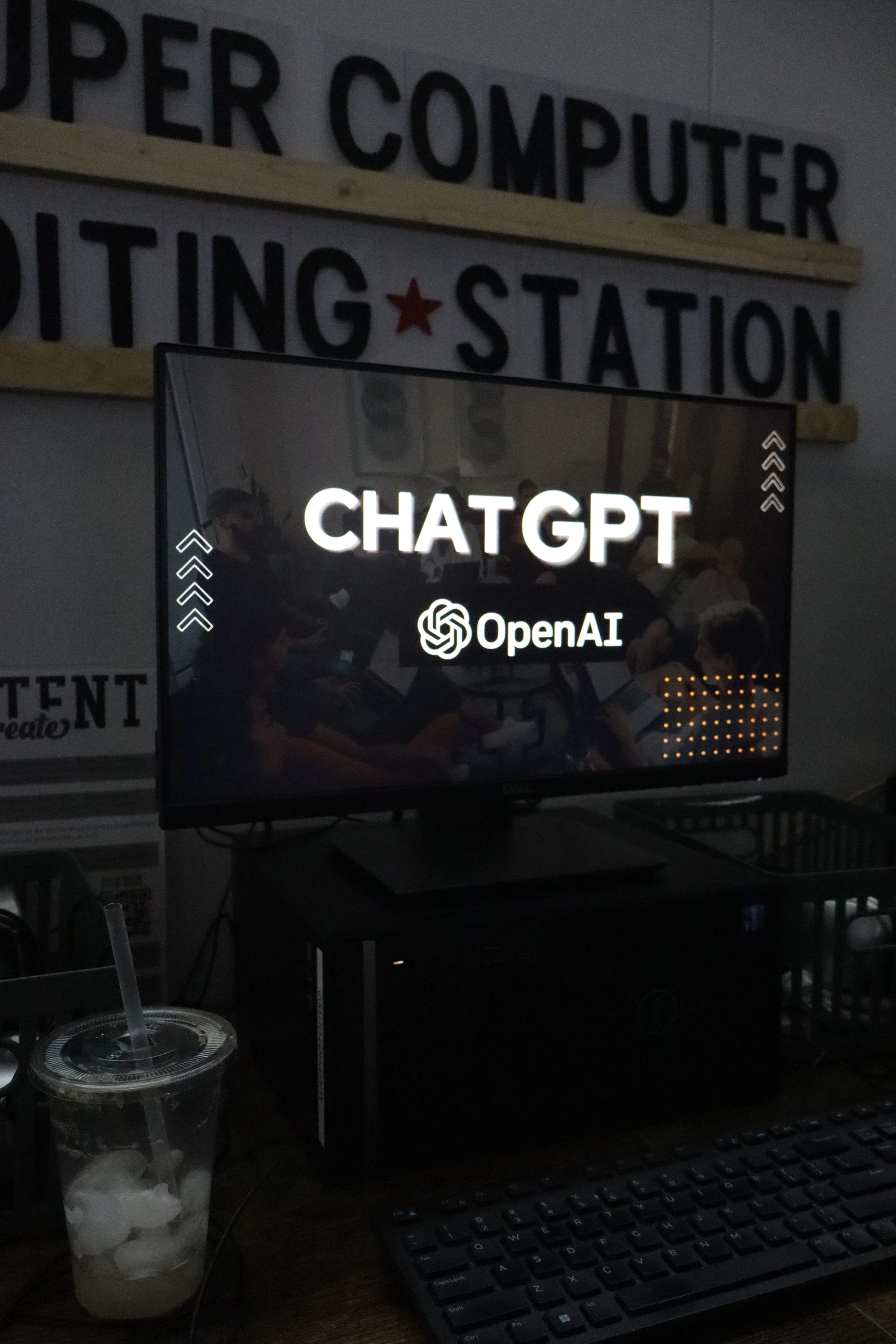
At Manteca High School Students and staff are still learning to use AI resources responsibly. (Photo attributed By Alex Rizo/The Tower)
By KAL OCHOA
The Tower
As artificial intelligence becomes a bigger part of school life, Manteca High School’s assistant principal is speaking out about how it’s affecting learning. Mr. MacDannald says that while AI can be a helpful tool, it’s important that students don’t rely on it too much because it could actually make learning harder in the long run.
“The problem is when students use AI to do everything for them,” Mr. MacDannald said. “You have to struggle a little to learn. If AI is doing all the work, students miss out on that part of the process.”
He explained that using technology too much can have the same effect as forgetting how to do simple things like memorizing phone numbers. “A few years ago, we all had to memorize numbers, but now we don’t even bother because our phones do it for us,” he said. “It’s the same thing with schoolwork. If you let AI do everything, you won’t develop the skills you really need.”
AI is already a big issue in classrooms, with many students turning to programs like ChatGPT to help write essays or solve problems. Mr. MacDannald pointed out that teachers often know when something’s off. They can spot when a student’s work is suddenly way more advanced than their usual level. “Teachers have years of experience,” he said. “If a student turns in something that’s out of their usual range, it’s a red flag.”
While AI detection tools are available, Mr. MacDannald said teachers usually just use their instincts. He used his time as a math teacher as an example, where he could tell when students used apps like Photomath instead of solving problems themselves.
Right now, the school treats AI as part of the same rules for cheating and plagiarism. “If AI is doing the work for you, it’s no different than if someone else wrote your paper,” he explained. And although parents haven’t raised many concerns yet, there have been a few moments when students and teachers disagree about whether AI was used on assignments.
To combat this, teachers are starting to find new ways to check for understanding that are harder for AI to fake, like oral presentations or in class activities.
Even though AI can be misused, Mr. MacDannald doesn’t think it’s all bad. When used properly, it can help with things like editing or brainstorming ideas. For example, he uses AI to help him draft and polish emails, but he makes sure not to let it do all the work. “AI is there to help, not to replace you,” he said.
“There was a time when using the internet was seen as cheating. Now, it’s trusted in many academic settings.”
According to Chad Henderson, AI has already begun to support teachers behind the scenes. He explained that the school’s curriculum now includes AI-assisted resources, such as lesson plans, which give teachers more flexibility and support when planning instruction.
Henderson compared today’s concerns about AI to how people once viewed the internet. “There was a time when using the internet was seen as cheating,” he said. “Now, it’s trusted in many academic settings.” He believes AI is still in its early stages and that society has not yet fully decided when or how it should be considered a reliable academic resource.
While some teachers are open to using AI, others remain cautious. Henderson said hesitation is understandable, especially because students using AI to generate work is often considered cheating. However, he believes that over time, AI may become more accepted as its accuracy improves and as schools create clearer guidelines.
When asked about academic dishonesty, Henderson said he has not seen a major increase due to AI. “Academic dishonesty has always existed,” he explained. He added that English teachers, as skilled readers and writers, are usually able to tell the difference between student work and AI generated writing. Over time, teachers have also become more familiar with the patterns and mistakes AI makes.
Because of these challenges, Henderson believes some teachers may return to more paper or in class assessments. This helps ensure that students are demonstrating their own understanding rather than relying on technology.
Currently, Henderson said that school policies on AI fall under existing plagiarism rules. In his class, using AI to complete an assignment dishonestly carries the same consequences as any other form of plagiarism.
Overall, Henderson believes AI will play a larger role in education in the future. While he understands why some teachers are cautious, he hopes schools can find responsible ways to integrate AI instead of avoiding it completely.
“I think there are some really cool things we can do with it,” he said. “And I’m looking forward to seeing where it goes.”